
Orangery vs conservatory: Key differences explained
- 13 February 2026
- News
What’s the difference between a conservatory and an orangery? It’s a question you may have asked yourself if you’ve been spending time scrolling through websites in the hope of finding the right extension for your home.
You’re not alone in wondering this, it is in fact one of the questions we get asked most by homeowners in the area, regardless of whether they’re in the Essex countryside or a semi-detached in East London.
Both conservatories and orangeries are accepted as being beautiful ways to add extra space and light to your home, but their structure, glazing, and overall feel differs. Conservatories often feature a higher percentage of glazing, are slightly more affordable and usually have pitched roofs. Orangeries feel more like a traditional extension of the home, with their brick base and roof lantern recognisable features.
Understanding these differences will help you decide whether a conservatory or new orangery is the better idea for your home, your lifestyle, and even your property’s market value. At Advanced Glazing Systems, we install both, offering a high standard design service tailored to you.
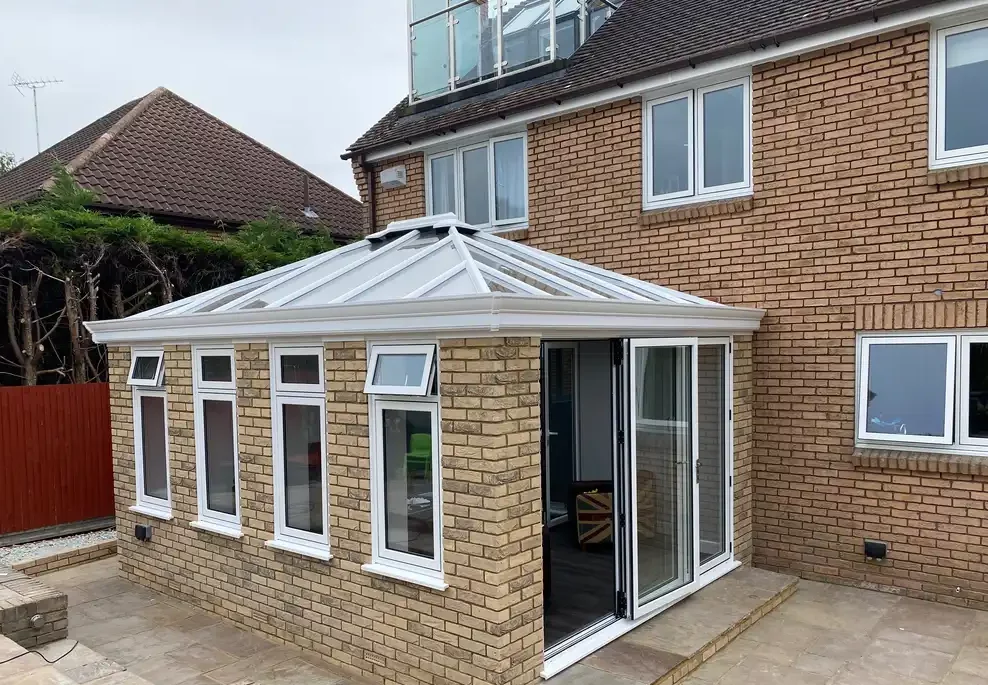
Orangeries are known for their brick base.
What are the major differences between orangeries and conservatories?
Although an orangery and a conservatory can look similar at first glance, there are several differences which we will explain here.
Appearance
Orangery
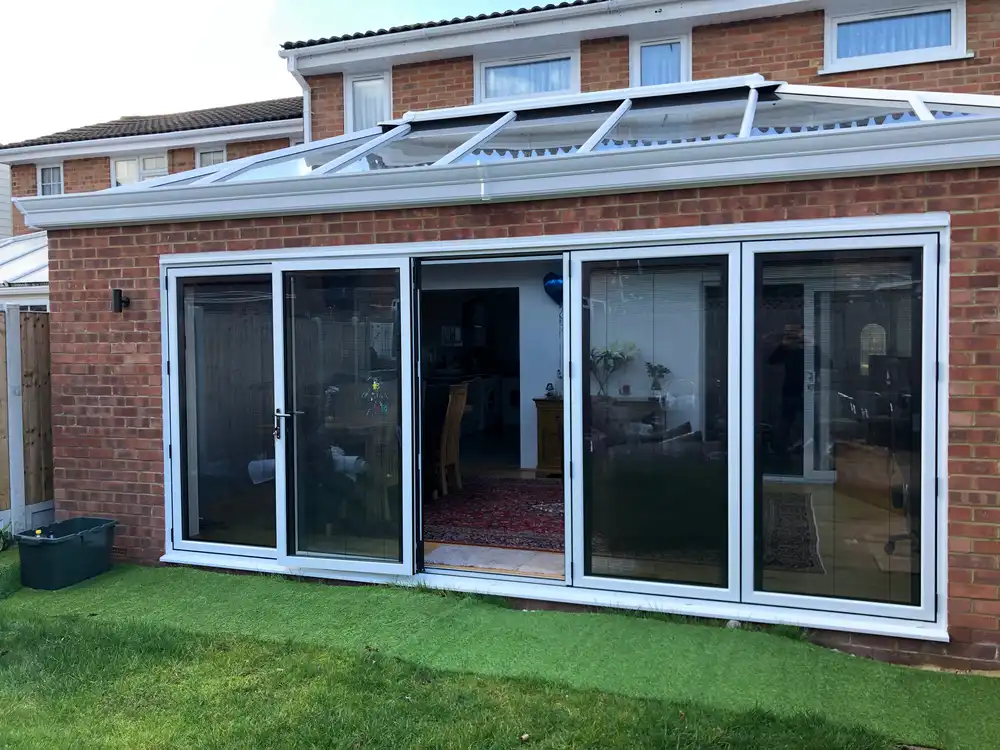
An orangery has a more substantial presence. It usually features a brick structure with solid walls and a flat roof with a central glass lantern, helping it blend with the main house.
Dating back to the 17th century, orangeries were used to protect citrus trees and orange trees in northern Europe and became a status symbol. Today, a new orangery offers a prestigious and versatile space for dining, relaxing or working from home.
Conservatory
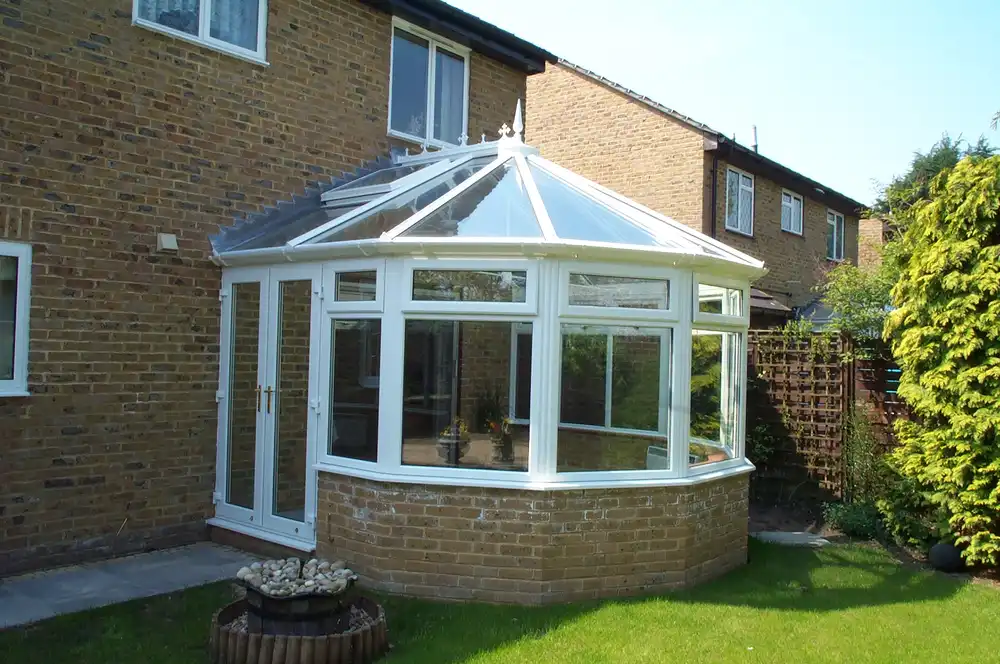
A conservatory typically features more glazing, often with large glass windows and a fully glazed roof, pitched glazed roof, or modern tiled roof. Modern conservatories are more flexible than the older fully glazed structures.
Available in styles such as Victorian, Georgian, Gable, and Lean-to, they are ideal for garden views, rare plants, or creating a bright, welcoming space filled with natural light.
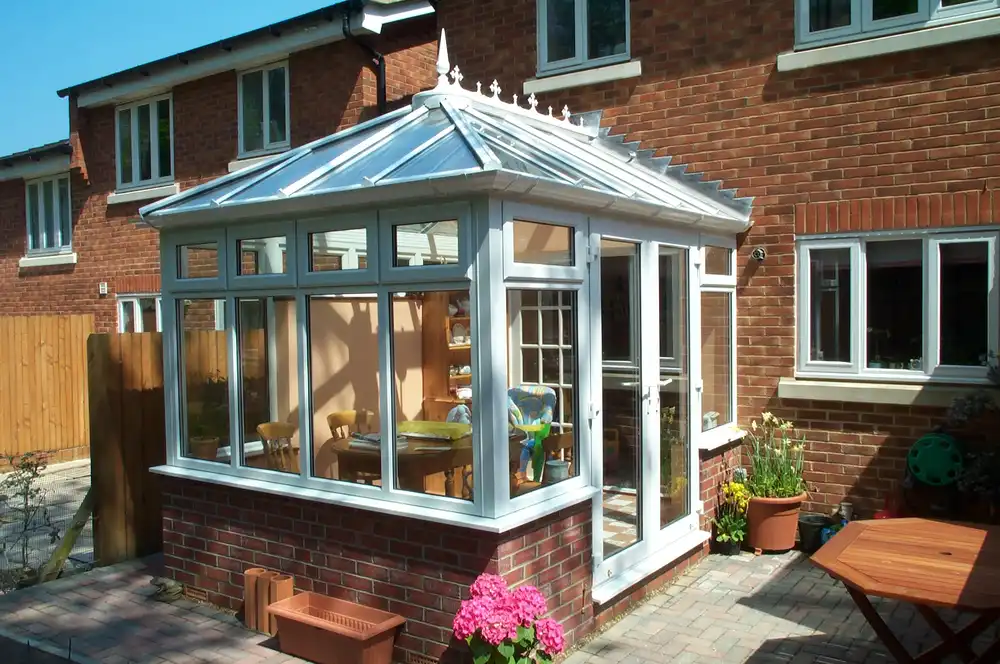
Conservatories typically have a higher percentage of glass than orangeries
Construction methods
Orangery
Orangeries combine solid base walls with glazed elements. Roofs may be flat with a lantern or a hybrid glazed system with an internal pelmet, allowing lighting or a standalone heating source to be integrated.
The brick structure and solid walls make an orangery feel more like a traditional home extension.
Conservatory
Conservatories are usually built with uPVC or aluminium frames and glass panels, with roof options including glazed, pitched glazed, or tiled systems. All installations comply with building regulations.
Thanks to modern materials, energy efficiency is now strong, making conservatories comfortable throughout the year.
Glazing proportions
Conservatories usually have a higher proportion of glazing, especially with a fully glazed roof, maximising natural light and garden connection. Orangeries balance solid walls with roof lanterns, offering light from above while improving insulation and privacy.
Thermal performance
Orangeries have traditionally offered better insulation due to solid walls and roof structures, particularly with a well-insulated flat roof. Modern conservatories now match this performance with advanced glazing, insulated tiled roofs, and thermally efficient frames.
History
Orangeries became popular in the 17th century, including examples at the Palace of Versailles. Conservatories gained popularity in the early 19th century, influenced by Sir Joseph Paxton’s Crystal Palace and earlier work at Kew Gardens’ Palm House. These designs also shaped glass use in the United States.
Table of key differences
| Feature | Orangery | Conservatory |
| Roof | Flat roof with lantern or hybrid glazed system | Glazed, pitched glazed, or tiled roof |
| Walls | Brick structure with solid walls | Predominantly glazed with frame support |
| Amount of glass | Moderate | Higher, depending on design |
| Appearance | Integrated with main house | Lighter, garden-facing structure |
| Thermal performance | Excellent insulation | Excellent with modern materials |
| Cost | Typically higher | Typically more affordable |
Choose a conservatory if
A conservatory may suit you best if:
- You want maximum natural light
• You prefer a wide variety of styles
• You are working to a tighter budget
• You want a quicker installation
• You enjoy the openness of a conservatory
Conservatories from Advanced Glazing Systems
We offer a complete range of conservatories across Essex and London:
- Styles including Victorian, Georgian, Gable, Lean-to, P- and T-shaped
- Roof options: Both glazed, tiled and hybrid systems
- Frame colours: white, cream, grey, light oak, black, and more
- Energy-efficient glazing as standard
Every conservatory is built to a high standard and tailored to your home.
Orangeries from Advanced Glazing Systems
Our Livin Orangeries combine light and structure beautifully:
- Flat roof with central glass lantern options
- Solid walls and brick pillars
- uPVC frames
- Fully bespoke design service
A new orangery creates a refined extension that complements the rest of the house.
FAQs
Do I need planning permission?
Many projects fall under permitted development guidelines. Conservation areas or listed buildings may face tighter restrictions, so it’s best to check first.
Will it add value to my home?
Yes. A well-designed extension can increase market value and appeal to potential buyers.
Are they energy efficient?
Yes. Modern glazing and insulated roofs provide excellent energy efficiency, keeping spaces warm in winter and comfortable in summer.
Do they comply with building regulations?
Where required, yes. All installations meet current building regulations for safety, insulation, and structural integrity.
Who are Advanced Glazing Systems?
Founded in 2004 by John Barnett, alongside his son Andrew and wife Julie, we are a family-run company delivering a high standard of workmanship across Essex and London.
Our expert team uses premium materials, including energy A rated glazing. We are a Which? Trusted Trader and FENSA registered. Every installation comes with a 10-year warranty, backed by insurance.
If you’re still deciding what is the difference between an orangery and conservatory for your home, speak to us today. Call +44 (1277) 230101 or email sales@advancedglazingsystems.co.uk for a free consultation.